We may earn a commission when you buy through links on this page. As an Amazon Associate we earn from qualifying purchases. How we make money.
Quick answer
The best deadlift shoes are flat, thin and firm: zero or near-zero drop, a sole you can’t squish, and grip on the floor. For most people that’s a pair of Converse Chuck Taylors (about $60 to $70). If you pull a lot and want a shoe made for it, get the Adidas The Total. Competing? A deadlift slipper like the Notorious Lifters Gen 3 or the SABO Deadlift Pro puts you as close to the floor as the rules allow.
Most deadlift shoe lists are really “shoes that happen to be flat” lists. They’ll tell you to avoid cushioning and then stop. What they skip is why the sole matters so much, and which kind of flat shoe fits which lifter. A slipper and a high-top trainer are both flat. They’re built for very different people.
I haven’t pulled in any of these. I’m new to barbell training myself, so this guide comes from manufacturer specs, lab measurements from RunRepeat, the reviews at Garage Gym Reviews and That Fit Friend, and the IPF rulebook. Where sources disagree, I say so.
What makes a good deadlift shoe?
Three things, and they’re not equally important.
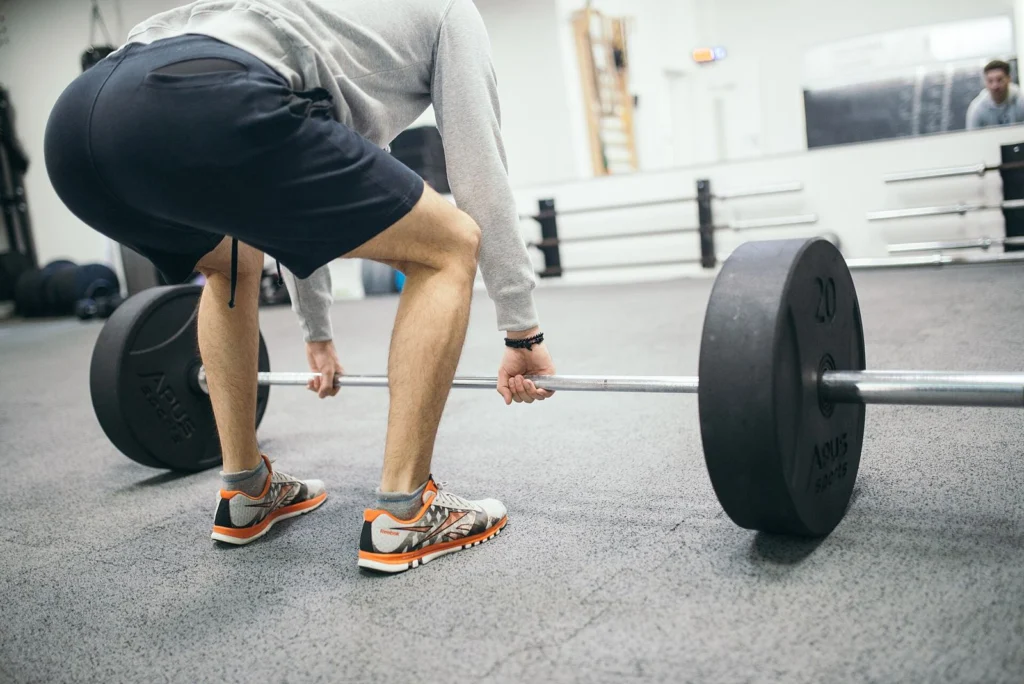
First, a flat sole. A heel tips your weight toward your toes and lets your hips drop lower, which turns the start of the pull into something closer to a squat. That’s handy for a clean. For a conventional deadlift, most lifters want their weight back over the midfoot and heels. That Fit Friend points out that weightlifting shoes carry a heel of 15 to 25 mm, and that extra height changes your whole setup.
Second, a thin sole. This is the part most guides skip, so I’ll spell it out. The bar starts at the same height no matter what you wear, because the plates sit on the floor. Your lockout height doesn’t. Stand on a thicker sole and your hands finish higher, so the bar has to travel further. With a flat shoe, the extra distance is roughly the thickness of the sole. Pull in a 3.8 mm slipper instead of a 12.5 mm trainer and you’ve cut close to a centimeter off every rep.
Is a centimeter a big deal? For a beginner, no. For a lifter chasing a meet PR where the last few inches are the slowest, it’s free distance. That’s the whole reason deadlift slippers exist.
Third, a firm sole. Soft foam compresses when you push into the floor, and your feet lose a stable base right when you need it. Running shoes are the classic mistake here. The gel or foam that feels great on a jog turns into a mattress under 400 pounds.
Grip and side support come after that. Sumo pullers push their feet out against the floor, so they care more about a sticky outsole and a sidewall that won’t roll. Conventional pullers can get away with almost anything flat.
Our deadlift shoe picks
Best for most
Converse Chuck Taylor All Star
Flat, firm rubber sole and a price around $60 to $70. The gym classic for a reason.
Best dedicated shoe
Adidas The Total
Built for pulling: 0 mm drop, a wide strap and a roomy toe box.
Best for meet day
Notorious Lifters Gen 3
A 3.8 mm slipper. About as close to barefoot as competition rules allow.
Deadlift shoes compared
| Shoe | Heel height | Closure | Best for | Typical price |
|---|---|---|---|---|
| Converse Chuck Taylor All Star | 0 mm (0.00") | Laces | Deadlifts on a budget, low-bar squats | $60–70 |
| Adidas The Total | 0 mm (0.00") | Laces + wide strap | Deadlifts, lifters who want one flat gym shoe | ~$120 |
| Notorious Lifters Gen 3 | 0 mm (0.00") | 2 straps (slipper) | Conventional deadlifts, meet day | ~$60 |
| SABO Deadlift Pro | 1 mm (0.04") | Laces + wide hook-and-loop strap | Competition deadlifts, sumo deadlifts | — |
| NOBULL High-Top Trainer (Outwork) | 4–5 mm* | Laces | Deadlifts plus general training, ankle support | $130+ |
The best deadlift shoes, reviewed
Best for most lifters
Converse Chuck Taylor All Star
- Heel heightFlat, near-zero drop
- ClosureLaces
- FitNarrow midfoot
- Best forDeadlifts on a budget, low-bar squats
Chucks were never designed for lifting, and that’s sort of the point. The sole is flat rubber with almost no drop, it barely compresses, and you can buy them in nearly any shoe store. Garage Gym Reviews likes them for exactly that: a grounded feel on deadlifts, and a high-top option if you want a bit of ankle support.
The trade-offs are real, though. The canvas upper wears out faster than a proper training shoe, the midfoot runs narrow, and a flat shoe does nothing for a high-bar squat. If your feet are wide, skip these and look at The Total instead.
Pros
- Cheap and easy to find
- Flat, firm rubber sole
- Low-top and high-top versions
Cons
- Narrow midfoot
- Canvas upper isn’t very durable
Best dedicated deadlift shoe
Adidas The Total
- Heel height0 mm drop (RunRepeat measured about 12.5 mm of stack)
- ClosureLaces + wide strap
- FitRoomy toe box; a few owners find it too wide
- Best forDeadlifts, lifters who want one flat gym shoe
Adidas sells The Total as a weightlifting shoe, but it’s really a pulling shoe. RunRepeat measured 0.0 mm of drop and about 12.5 mm of stack, and described it as an exceptionally grounded shoe that felt close to training barefoot. Laces plus a wide hook-and-loop strap keep your midfoot from sliding around, and the toe box is roomy enough to spread your toes into the floor.
Who should skip it? Anyone who wants one shoe for squats too. RunRepeat itself points squat-focused lifters to the Adidas Powerlift 5 instead. A few owners also say it runs wide, so narrow feet may feel loose.
Pros
- True zero drop
- Strap for lockdown
- Roomy toe box
Cons
- Not a versatile trainer
- Thicker sole than a slipper
Best slipper for conventional
Notorious Lifters Gen 3
- Heel heightFlat; 3.8 mm sole
- Closure2 straps (slipper)
- FitStandard D-width toe box; true to size, size up for wide feet
- Best forConventional deadlifts, meet day
If you compete, or just want the shortest possible pull, this is the shoe. The sole is 3.8 mm thick and perfectly flat, two straps hold it on, and Notorious Lift lists it at around $60. It’s a slipper, so there’s no sidewall to speak of. That’s fine for conventional. Sumo pullers who drive their feet out hard should look at the SABO below. Notorious says it fits true to size with a standard D-width toe box, and suggests wide-footed lifters size up. Popular sizes sell out, so don’t leave it until the week before a meet.
Pros
- Very thin sole
- Cheap for a specialty shoe
Cons
- No side support
- Sizes sell out
Best for sumo
SABO Deadlift Pro
- Heel heightAbout 1 mm drop; sole listed at 2–5 mm
- ClosureLaces + wide hook-and-loop strap
- FitEU sizing; check the brand's size chart in mm
- Best forCompetition deadlifts, sumo deadlifts
The SABO Deadlift Pro sits between a slipper and a shoe. Retailers list the sole at 2 to 5 mm with about 1 mm of drop, so it’s nearly as low as a slipper. What it adds is structure: laces, a wide strap across the top of the foot, and raised boards at the heel and toe. One reviewer says that reinforced side support makes a big difference on sumo, where your foot wants to roll outward as you push the floor apart.
The catch is buying one. It’s an import, US prices bounce around depending on the seller, and sizing is European. One reviewer’s tip is to measure your foot in millimeters and use SABO’s own chart rather than a generic conversion.
Pros
- Almost as low as a slipper
- Side support for sumo
Cons
- Hard to find in the US
- EU sizing
Best for deadlifts plus training
NOBULL High-Top Trainer (Outwork)
- Heel height4–5 mm drop
- ClosureLaces
- FitNarrower toe box than most flat shoes
- Best forDeadlifts plus general training, ankle support
Garage Gym Reviews names the NOBULL high-top its best overall deadlift shoe. I’d put it lower, mainly because it isn’t fully flat: reviews list a 4 to 5 mm drop, and it costs twice what Chucks do. Where it wins is everything else. Reviewers praise its stability and ankle support as a training shoe, so it makes sense if you deadlift, then do accessories, sled pushes and box jumps in the same session. Expect a break-in period, and check the model name, because NOBULL renamed the original High-Top Trainer to the Outwork High-Top and sells a cushier Trainer+ alongside it.
Pros
- Durable training shoe
- Ankle support
Cons
- 4 to 5 mm drop
- Pricey, narrower toe box
Can you deadlift in squat shoes?
You can. Most people shouldn’t. A heeled shoe adds both height and forward lean, so you get a longer pull and a start position that shifts your weight toward your toes. Some lifters do pull well in heels, usually ones who like a more upright, quad-heavy start. If that’s you, fine. Everyone else is better off changing shoes between squats and pulls.
That swap is normal at meets, by the way. The IPF footwear rule covers what kind of shoe you wear, not how many pairs you bring. If you want the heeled side of the story, our guide to the best shoes for squats matches heel height to squat style.
Deadlift shoes vs socks or barefoot
Pulling in socks gives you the shortest possible range of motion. It’s free, though some gyms don’t allow it. The bigger problem is competition: the IPF rulebook says shoes or boots shall be worn, and it bans socks with a rubber outer sole. So barefoot-style training is fine at home, but you’ll need something legal on the platform anyway. A slipper is the closest legal thing to socks.
For the meet itself, the 2024 IPF Technical Rules Book allows indoor sports shoes, weightlifting or powerlifting boots, and deadlift slippers. No part of the underside can be higher than 5 cm, the underside has to be flat, and loose insoles are capped at 1 cm. Every shoe on this page clears that easily. Your own federation may word it differently, so check its rulebook before you buy for a meet.
How to choose in 30 seconds
- Just started lifting, budget matters: Converse Chuck Taylors.
- You train deadlifts seriously and want one shoe built for it: Adidas The Total.
- You compete and pull conventional: Notorious Lifters Gen 3.
- You compete and pull sumo: SABO Deadlift Pro.
- You deadlift inside a mixed workout and want a do-everything shoe: NOBULL Outwork High-Top.
Flat feet change things a bit, since a totally flat, unsupportive sole can let your arch collapse under load. Our flat feet guide covers what to look for there. And if you only want one pair of lifting shoes for everything, start with the main buyer’s guide instead.
Our verdict
Start with Chucks. Upgrade when the bar gets heavy.
A $60 pair of Converse handles the deadlift better than most expensive trainers, because flat and firm is all the lift asks for. When you start pulling seriously, the Adidas The Total is the best shoe actually built for it. Save the slippers for meet prep, where every millimeter of sole you shave off is distance you don’t have to pull.
FAQ
What kind of shoes should you deadlift in?
Flat, thin, firm-soled shoes. A zero-drop sole keeps your weight over your midfoot, a thin sole keeps the pull short, and a firm sole won’t squish under load. Converse, dedicated deadlift shoes and deadlift slippers all fit that description.
Are flat lifting shoes better for deadlifts?
For most lifters, yes. A heel shifts you forward and raises you up, which adds distance to the pull. Some lifters who prefer a more upright start do fine in heels, but flat is the safer default.
Are deadlift slippers worth it?
They’re worth it if you compete or chase max pulls, because the 3.8 mm sole on a slipper like the Notorious Lifters Gen 3 is about as thin as footwear gets. For general training, Chucks or a flat trainer do the job for less hassle.
Can you deadlift in running shoes?
You can, but it’s the worst common choice. Soft, thick foam compresses under heavy loads and adds height to the pull. Any flat, firm shoe is an upgrade.
Are deadlift shoes allowed in IPF powerlifting?
Yes. The IPF allows indoor sports shoes, weightlifting or powerlifting boots and deadlift slippers, as long as the underside is flat and no higher than 5 cm.
Sources
- Garage Gym Reviews: best shoes for deadlifting
- RunRepeat lab review of the Adidas The Total
- IPF Technical Rules Book 2024 (footwear rules)
- That Fit Friend: squat shoes vs deadlift shoes
- Converse Chuck Taylor All Star specs: garagegymreviews.com, journeys.com
- Adidas The Total specs: adidas.com, thatfitfriend.com
- Notorious Lifters Gen 3 specs: notorious-lift.com, notorious-lift.com
- SABO Deadlift Pro specs: mbcpower.jp, torokhtiy.com, walmart.com, thatfitfriend.com
- NOBULL High-Top Trainer (Outwork) specs: garagegymreviews.com, thatfitfriend.com, reviewed.com