We may earn a commission when you buy through links on this page. As an Amazon Associate we earn from qualifying purchases. How we make money.
Quick answer
The best shoes for squats depend on the squat. High-bar and front squats: a 20 mm lifter like the Nike Romaleos 4. Beginners or mixed training: a 15 mm heel like the Adidas Powerlift 5 or Nike Savaleos. Low-bar or wide-stance sumo-style squats: a flat, firm shoe usually beats any lifter.
Most “best squat shoe” lists skip the obvious question: which squat? A narrow, upright high-bar squat and a wide, sit-back low-bar squat want different things from your feet. I went through a pile of reviews and a few lab studies for this guide, and it took me a while to notice that half the arguments online are people describing different squats. Figure out your style first and the shoe pretty much picks itself.
What a raised heel actually does to your squat
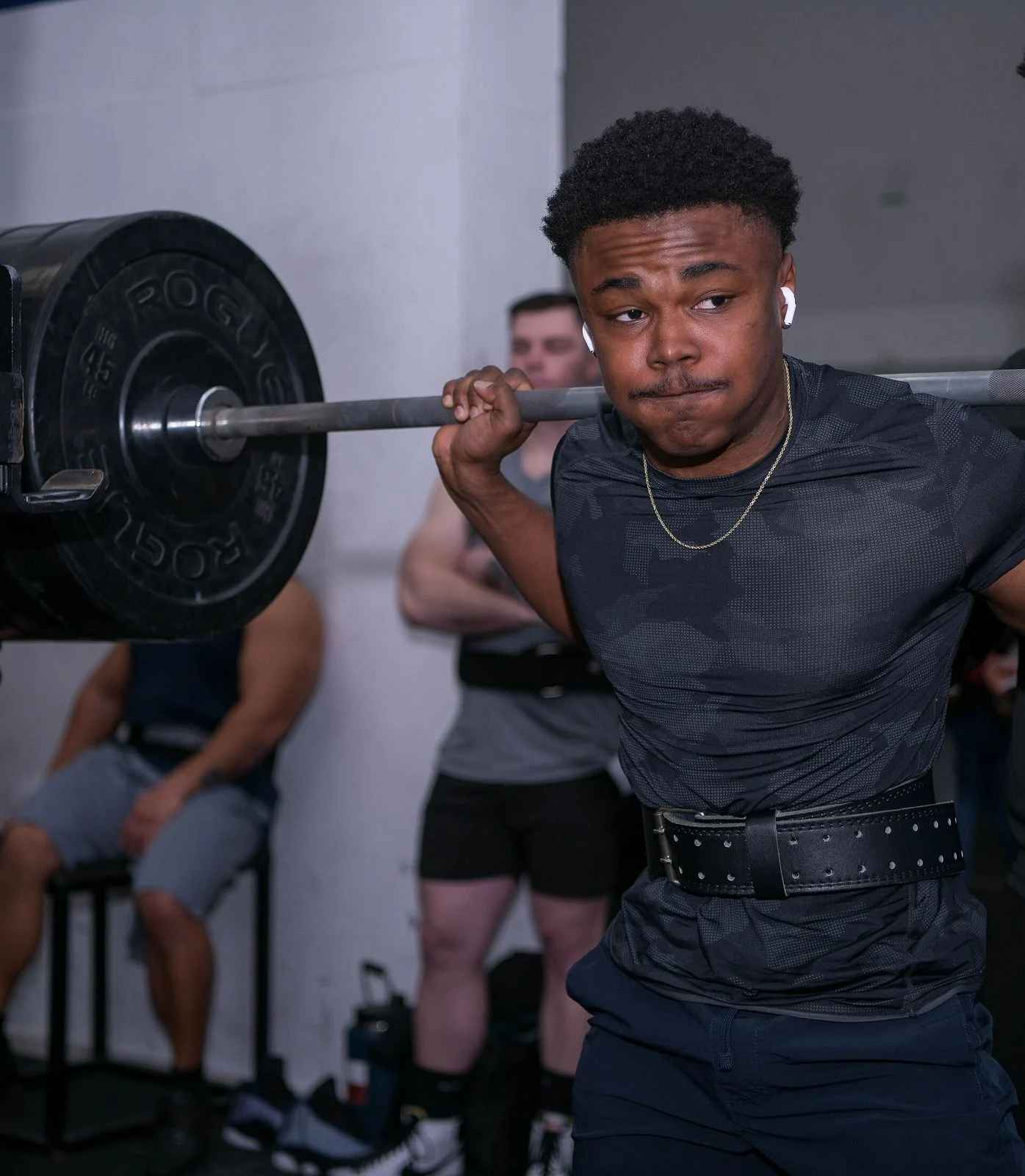
There’s real research here, which is rare for gear. A 2017 study in the Journal of Sports Sciences (Legg and colleagues, 32 lifters) compared weightlifting shoes with regular athletic shoes. In lifters, the ankle bent less, the knee bent more, and unloaded squats showed a more upright trunk. Experienced squatters got more out of the shoes than novices did.
So a lifter doesn’t make you stronger. It changes where the bending happens. Less ankle bend is needed to hit the same depth, which is exactly what you want if your ankles are stiff and your chest keeps dropping.
It isn’t a slam dunk, though. A smaller 2016 study in the Journal of Strength and Conditioning Research (nine men, squats at 50 to 90% of max) found less ankle bend in lifters too, but the authors said the broader benefits still need more research. My read: the heel reliably changes your position. Whether that position is better depends on your squat.
Which heel height for which squat?
- High-bar back squat and front squat: 20 to 22 mm. Your knees travel far forward and your torso stays upright, so extra heel gives your ankles slack.
- General strength training, beginners, squatting twice a week: about 15 mm. It cleans up depth for most people and doesn’t feel like standing on a ramp.
- Low-bar back squat: 0 to 15 mm. You sit back into your hips, and a tall heel nudges your weight toward your toes. Many low-bar lifters go flat, some like a small heel.
- Wide-stance or sumo-style squats: flat. With your shins close to vertical, the ankle isn’t the limiting joint, so a heel buys you very little.
A quick self-test I’d try before spending money: squat to depth with bodyweight, barefoot, arms out in front. If your heels peel off the floor or your chest folds toward your knees, a lifter will probably help a lot. If you sit down comfortably with flat feet, you might not need one at all.
Long thighs push you toward the taller end too. The longer your femurs, the more your knees have to travel forward to keep the bar over your midfoot, and heel height is the easiest way to buy that range.
Our best shoes for squats
High-bar & front
Nike Romaleos 4
20 mm heel, two straps, the most incompressible lifter RunRepeat has tested.
Best first pair
Adidas Powerlift 5
15 mm heel, stiff and stable, fair price. Narrow fit.
Long legs
Reebok Legacy Lifter III
Tall heel and a locked-in upper for lifters who fold forward.
| Shoe | Heel height | Closure | Best for | Typical price |
|---|---|---|---|---|
| Nike Romaleos 4 | 20–20.5 mm* | Laces + 2 straps | Olympic lifts, heavy squats | $200–230 |
| Reebok Legacy Lifter III | 20.5–22 mm* | Laces + strap | Olympic lifts, tall lifters | ~$220 |
| TYR L-2 Lifter | 21 mm (0.83") | Laces + 2 straps | Wide feet, Olympic lifts | ~$225 |
| Adidas Powerlift 5 | 15–16 mm* | Laces + 1 strap | Beginners, powerlifting | $110–130 |
| Nike Savaleos | 15–15.5 mm* | Laces + 1 strap | Beginners, budget | $120–125 |
| Converse Chuck Taylor All Star | 0 mm (0.00") | Laces | Deadlifts on a budget, low-bar squats | $60–70 |
Best for high-bar & front squats
Nike Romaleos 4
- Heel height20–20.5 mm
- Weight~19–20 oz (US 10.5)
- ClosureLaces + 2 straps
- FitWide flat outsole, but a snug toe box; many owners size up half
- Best forOlympic lifts, heavy squats
If you squat high-bar or front squat a lot, the Romaleos 4 is about as stable as a shoe gets. RunRepeat called it the most incompressible lifter they’ve tested, and the outsole is wide and flat with two straps across the midfoot.
The catch is fit. The toe box is snug and many owners size up half, so wide feet should look at the TYR L-2 instead. RunRepeat also noticed slight heel slip in lifters with narrow ankles. It’s heavy and stiff, a squat-and-lift shoe and nothing else. Our full Romaleos 4 review covers sizing in detail.
Pros
- Very stable under heavy loads
- Two-strap lockdown
- Wide, flat outsole
Cons
- Snug toe box
- Heavy
- Premium price
Best first squat shoe
Adidas Powerlift 5
- Heel height15–16 mm
- Weight~14.4–15 oz (US 10; ThatFitFriend, RunRepeat lab)
- ClosureLaces + 1 strap
- FitNarrow toe box (RunRepeat 89.2 mm) and runs short; many owners size up half
- Best forBeginners, powerlifting
For lifters who squat a couple of times a week and want better depth, the Powerlift 5 is the safe default. RunRepeat measured the heel at 15.2 mm and gave the platform full marks for torsional stiffness, so it feels solid even at its price. It runs narrow and a bit short, though. Most reviewers suggest half a size up. See our Powerlift 5 review for the fit details.
Pros
- Stiff, stable platform
- Easy heel height to adapt to
- Good bench shoe too
Cons
- Narrow toe box
- Runs short
Best for tall lifters
Reebok Legacy Lifter III
- Heel height20.5–22 mm
- Weight~22.1 oz / 627 g (RunRepeat lab)
- ClosureLaces + strap
- FitRoomy at the widest point (RunRepeat 94.8 mm) but tapers toward the toes; true to size
- Best forOlympic lifts, tall lifters
Long femurs make upright squatting hard. The Legacy Lifter III is Reebok’s answer: Reebok lists a 22 mm heel and RunRepeat measured 20.5 mm, still at the tall end. The upper hugs your foot hard, which helps if your heel tends to slip. It’s also the heaviest shoe here at about 22 oz. Skip it if you squat low-bar; it’ll tip you forward.
Pros
- Tall heel for long legs
- Very secure upper
- Durable build
Cons
- Heavy
- Too much heel for low-bar
Best for squats plus other training
Nike Savaleos
- Heel height15–15.5 mm
- Weight~14.8 oz / 420 g (RunRepeat lab)
- ClosureLaces + 1 strap
- FitVery wide platform; sources split on the toe box (BarBend: roomy; RunRepeat gel mold: narrow, 89.4 mm). Runs about half a size small
- Best forBeginners, budget
The Savaleos is the shoe for people who squat and then keep training in the same pair. It’s light, flexible up front and has a 15 mm heel. Here’s the trade: RunRepeat’s durometer read its platform at 36.5 HA, against 95 to 97 for typical lifters. That softness makes it nicer for lunges and box work and less ideal under a near-max squat. Fit reports also conflict. BarBend calls the toe box roomy, while RunRepeat’s mold measured it narrow and found it runs about half a size small.
Pros
- Light and flexible
- Fine for accessory work
- Very wide platform
Cons
- Soft under heavy loads
- Runs small
What about low-bar squats?
Go flat, or close to it. Many low-bar lifters squat in a thin, hard-soled shoe so they can sit back and push through the whole foot. Classic Chuck Taylors have been the cheap gym answer for decades because the sole barely compresses. They’re narrow through the midfoot and the canvas wears out, but for low-bar squats and deadlifts they do the job.
What you want to avoid is a soft running shoe. Foam squishes unevenly under a heavy bar, and your foot ends up chasing balance instead of pushing into the floor. If you squat low-bar and also pull from the floor, our main buyer’s guide covers who doesn’t need lifters at all.
Who should skip squat shoes
If you can already hit depth with flat feet and a decent torso angle, a lifter is optional. Same if your squats are mostly part of a circuit with running or jumping; switch shoes every round and you’ll hate it. And if a squat hurts, new shoes are not the fix. Sort out the pain with a professional first.
On a tight budget? A raised heel is the main thing you’re paying for, and you don’t need $200 for it. Our cheap lifting shoe guide compares the sub-$130 options.
Our verdict
Upright squatter? Get a lifter. Low-bar? Stay flat.
For most people starting out, the Adidas Powerlift 5 is the easiest win if your feet aren’t wide: real heel, stiff platform, fair price. If you front squat or train the Olympic lifts, step up to the Romaleos 4.
FAQ
Do squat shoes really make a difference?
For high-bar and front squats, usually yes. Lab studies show lifters reduce how far your ankle has to bend and let you stay more upright, and experienced squatters seem to benefit most. Low-bar squatters see less benefit.
Can I squat in running shoes?
It’s not ideal. Soft, cushioned midsoles compress under load, so your foot can wobble. A flat, firm shoe or a lifter is more stable.
Is a higher heel always better for squats?
No. Too much heel shifts your weight toward your toes. Match the height to your squat style and leg length, and start around 15 mm if you’re unsure.
Are squat shoes good for deadlifts?
Not really. A raised heel tips you forward and adds height you have to pull through. Most lifters deadlift flat, or in socks where the gym allows it.
How tight should squat shoes fit?
Snug through the midfoot and heel with no slip, but with room for your toes to spread. If your toes are crushed or your heel lifts inside the shoe, try another size or model.
Sources
- Legg et al. (2017), The effect of weightlifting shoes on the kinetics and kinematics of the back squat, J Sports Sci
- Whitting et al. (2016), Influence of footwear type on barbell back squat, J Strength Cond Res
- RunRepeat lab review: Nike Savaleos (platform hardness, toe box width)
- RunRepeat lab review: Nike Romaleos 4
- Nike Romaleos 4 specs: barbend.com, garagegymlab.com, roguefitness.com, garagegymreviews.com
- Adidas Powerlift 5 specs: fitnessvolt.com, mensjournal.com, runrepeat.com, thatfitfriend.com
- Reebok Legacy Lifter III specs: thatfitfriend.com, runrepeat.com, runrepeat.com
- TYR L-2 Lifter specs: roguefitness.com, tyr.com
- Nike Savaleos specs: garagegymreviews.com, runrepeat.com
- Converse Chuck Taylor All Star specs: garagegymreviews.com, garagegymreviews.com, journeys.com